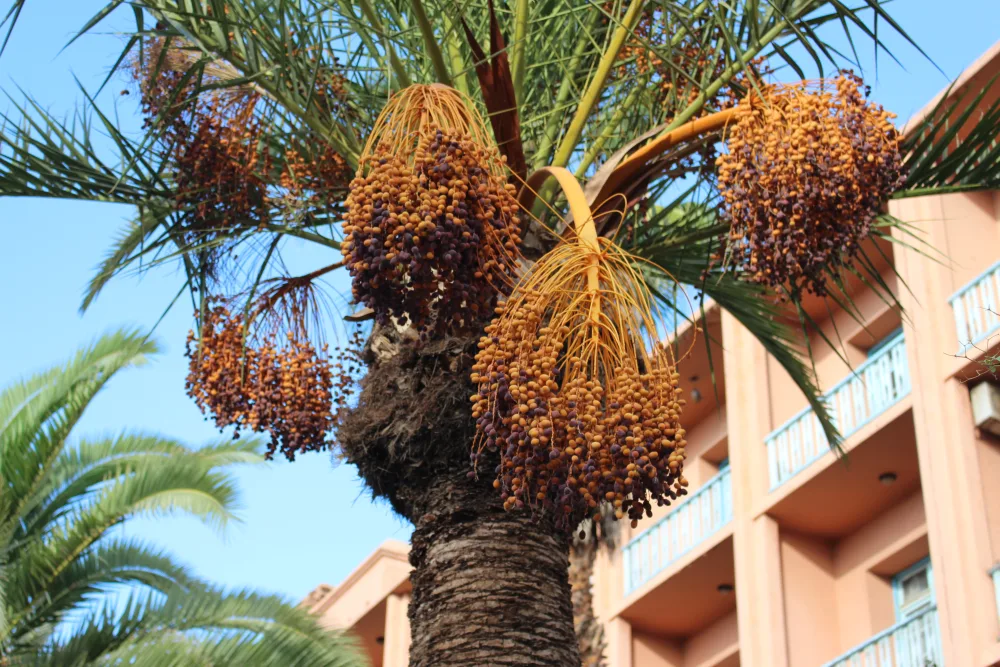
Why did last month's sukkari melt like caramel while today's batch is chewy and crystallized? The answer is not quality — it is ripeness stage. Dates are sold at several different points along their ripening journey, and understanding those points is the most useful skill a date buyer can own. Here is the complete map, applied specifically to the sukkari variety.
The Five Life Stages of a Date
Horticultural literature divides a date's journey into five stages, using Arabic terms recognized worldwide:
- Hababouk — the tiny fruit just formed after pollination; not eaten.
- Kimri — green, hard, astringent; the growth phase.
- Khalal — full size and color change; on sukkari, a bright golden yellow. Apple-crisp, with fading astringency and rising sweetness.
- Rutab — the tip softens and darkens; sugars peak while moisture remains at 30-40%. The stage devotees hunt.
- Tamr — fully ripened and naturally dried; concentrated sugars, long shelf life.
Stage transitions do not happen uniformly across a single fruit: it is common to see a date whose body is still crisp yellow khalal while its tip has softened into rutab — in Saudi markets, such "two-stage" fruit is actually loved for delivering two textures in one bite. On sukkari, this khalal-to-rutab transition is the most hunted moment: sugars are nearly fully formed while khalal freshness still lingers. Once the whole fruit softens, it is fully rutab; and as water keeps receding until the fruit sets and stores well, it becomes tamr.
So why does the Indonesian market meet tamr far more often than khalal or rutab? Logistics: khalal is too fragile for weeks at sea, rutab demands refrigerated containers that raise costs, while tamr rides happily in ordinary dry containers. That is why rutab in Indonesia is forever a seasonal, awaited item — and why its price deserves to differ.
Where Does Mufattal Fit?
Mufattal is not a sixth stage but a special condition of sukkari tamr: once moisture drops far enough, part of the glucose forms fine crystals on and within the flesh. In Saudi Arabia, sukkari mufattal is prized as premium — the crystals read as concentrated flavor. In Indonesia, those same crystals are routinely mistaken for spoilage or mold; in reality it is pure sugar physics. If you have ever rejected a crystallized date, you may have rejected the class most sought after in its homeland.
The Practical Table: Stage, Texture, Storage
| Stage | Moisture | Texture & taste (sukkari) | Storage | Keeps |
|---|---|---|---|---|
| Khalal | High (~50-85%) | Crisp, lightly sweet-astringent | Refrigerated | Short, highly seasonal |
| Rutab | ±30-40% | Melting, juicy, caramel-honey | Strictly 0-5°C | ±1-6 months chilled |
| Tamr | Low | Chewy, densely sweet | Cool, dry room | Months |
| Mufattal (crystallized tamr) | Low | Chewy-crisp crystals, most intense | Room temp, sealed | Months |
The Science: Glycemic Index Shifts with Stage
Here is what sellers rarely mention: ripeness is not just texture — it changes how your body responds. A Cureus study (2023) tested Saudi dates at three stages (khalal, rutab, tamr) and found that glycemic index and glycemic response differ by ripeness stage. Our honest caveat: that study examined the Khalas and Barhi varieties, not sukkari directly — but the mechanism (shifting sugar, water, and fiber composition as fruit ripens) applies to dates generally. For sukkari itself, the 2025 Frontiers in Nutrition review records a GI of 43.4 (low category). The practical takeaway: do not be surprised when rutab and tamr of the same variety taste — and behave — slightly differently.
Choosing a Stage for Your Needs
- Experience hunters — chilled rutab is peak sukkari; buy in season (August-October) and refrigerate.
- Home & office stock — tamr/mufattal wins outright: months at room temperature, zero drama.
- Out-of-town gifts — choose mufattal; rutab only for short routes with cold packs.
- Intense-sweetness fans — mufattal; light-sweetness fans — rutab.
- Seniors and sensitive teeth — rutab chews gentlest; mufattal can be briefly steamed to soften.
- Introducing dates to children — start with soft, sweet rutab, then move to tamr as they get used to it.
There is no single "correct" stage — only the stage that fits your needs and your kitchen. A buyer who understands stages is never disappointed, because they know exactly what they are buying.
A Buyer's Checklist
Stage knowledge pays off most while shopping. Four questions worth asking any seller: which stage is this — rutab or tamr? (serious sellers always know); when did this lot arrive? (rutab ages in months, not years); at what temperature is it stored? (rutab displayed unchilled is a red flag); and for crystallized fruit, is this mufattal? A seller who calmly answers "yes, natural sugar crystals" understands the product; one who fumbles deserves a second thought. These four simple questions filter out most quality problems before money changes hands.
From an Al-Qassim Palm to a Jakarta Table
This stage calendar runs our logistics: refrigerated rutab containers follow Al-Qassim's August-October harvest, while mufattal stocks the pantry year-round. Both ship from our Cakung, East Jakarta warehouse with same-day/next-day delivery across Greater Jakarta — West Jakarta to Bogor. Want a ping when the best rutab lots land? Leave a message at WhatsApp +62 823-4350-8579.