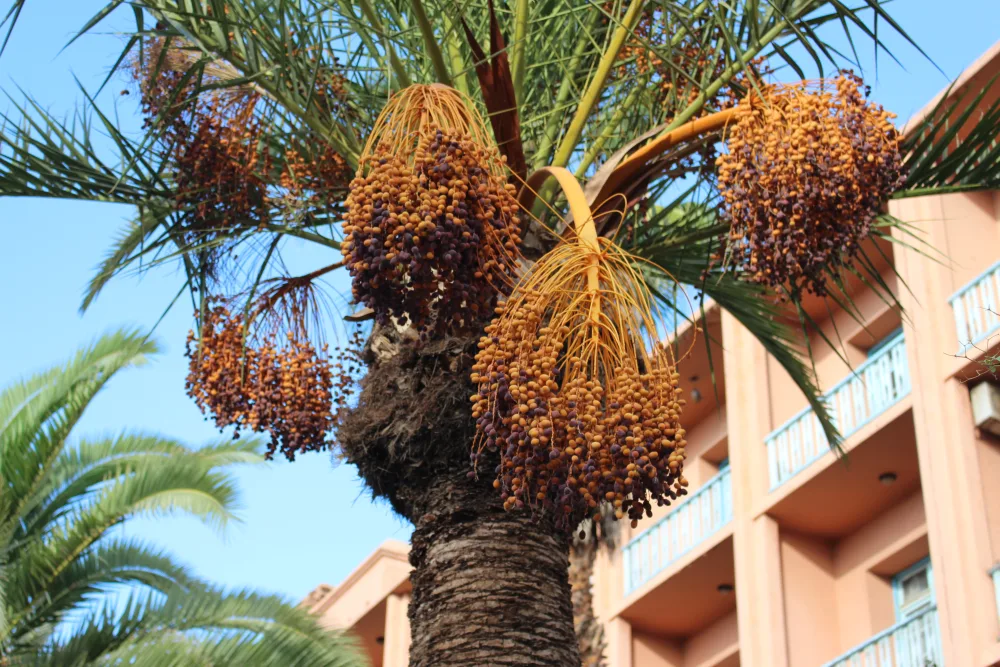
Sukkari (also written sukari) is a date variety (Phoenix dactylifera) from Al-Qassim Province, Saudi Arabia, recognized by its golden-yellow skin, melting texture, and caramel-honey sweetness. The name derives from the Arabic sukkar (سكر), meaning sugar; Indonesians crown it the "royal date" or "queen of dates". That is the 50-word answer — now let us unpack it properly.
The Meaning: From 'Sukkar', the Arabic Word for Sugar
In Arabic the variety is written سكري and pronounced sukkarī — literally "sugary" or "sugar-like", a direct derivative of sukkar (sugar). From that single Arabic word come all the Latin spellings you will meet in the market: sukari, sukkari, sometimes sukkary or sokari. They all name the same fruit; there is no difference between a "sukari date" and a "sukkari date" beyond the writer's transliteration habits. This site uses both interchangeably, just as traders in Saudi Arabia and importers in Jakarta do.
Disambiguation: Baby Name, Trade Brand, or Variety?
Online, the word "sukari" lives in three frequently confused worlds:
- The date variety — this page's subject: the native cultivar of Al-Qassim, Saudi Arabia.
- A baby name — several name dictionaries list "Sukari" as a girl's name of Swahili usage, also meaning sweet like sugar; the root is the same Arabic word, but the context is entirely different.
- Trade brands — buyers often ask about "Golden Valley vs sukari": Golden Valley is a packaging brand, while sukkari is the name of the fruit variety. One brand can pack any variety, and the sukkari variety is sold under many brands. What you should verify when buying is the variety name and origin — not just the label.
Why the Royal Nickname?
The title was not invented by Indonesian marketers. Saudi and Indonesian media records agree that sukkari has long been a favorite of Arab nobility — the date served to honored guests. The tradition is alive today: Arab News reporting from the Buraidah date carnival (2024) notes sukkari remains the most sought-after variety at the world's largest date market. Prices tell the same story: at Al-Qassim auctions, the finest sukkari lots have drawn bids up to 700 riyals while ordinary lots can go for as little as 5 riyals per 3kg — a spread that shows how seriously Saudis grade this variety's quality. "King" and "queen of dates" are used interchangeably across sources; both are legitimate, and both point to the same golden fruit.
Quick Facts
| Aspect | Summary |
|---|---|
| Species | Phoenix dactylifera (date palm) |
| Main origin | Al-Qassim Province, Saudi Arabia (hubs: Buraidah & Unaizah) |
| Color | Golden yellow to light brown |
| Texture | Melting-soft (rutab) to chewy-crystallized (mufattal) |
| Taste | Caramel-honey sweetness |
| Glycemic index | 43.4 — low category, under 55 (Frontiers in Nutrition, 2025) |
| Market forms | Rutab (fresh, cold chain) and mufattal/tamr (dried) |
| Harvest season | ±August-October |
Two Faces of Sukkari: Rutab and Mufattal
The variety reaches buyers in two main forms. Rutab is the fresh form: 30-40% moisture, requiring an unbroken 0-5°C cold chain, keeping roughly 1-6 months refrigerated — the form people fall in love with at first bite. Mufattal (the dried tamr form) carries natural sugar crystals on and within the flesh; in Saudi Arabia this form is actually prized as premium, although in Indonesia the crystals are often mistaken for spoilage. Understanding the two forms matters before buying, because storage and eating experience differ completely.
Physical Markers: Spotting Sukkari on a Shelf
Among the dozens of varieties sold in Indonesia, sukkari is one of the easiest to identify — once you know what to look for. Shape: a rounded cone, slightly shorter than the elongated safawi or mabroom. Color: golden yellow to light brown; the deeper into tamr, the darker it turns, and mufattal develops a fine whitish crystal dusting. Flesh: thick, with a relatively small pit, and skin that often shows the faintly "sugar-sanded" look typical of very high-sugar varieties. The final test is still the tongue: caramel-honey sweetness that lights up fast with no lingering astringency. If a date labeled "sukkari" is deep-dark or wood-hard, the label is probably wrong — or the fruit is far past its prime.
Sukkari in Indonesia
Indonesia is one of the hungriest date markets on earth: national statistics (BPS) recorded 32.89 thousand tons of date imports worth US$38.76 million in January-February 2025 alone, with Saudi Arabia the second-largest supplier (13.87%) after Egypt. On marketplaces, 850g sukkari tubs commonly sell for Rp42,500-89,500 with individual listings recording hundreds of sales — proof the variety is a cross-city favorite from Jakarta to Bogor. As an encyclopedia with a working warehouse in Cakung, East Jakarta, we watch the pattern yearly: demand climbs from about five months before the fasting season and peaks when the fresh rutab arrives.
Keep Reading
From this definition, our encyclopedia branches into deeper territory: the Buraidah date market and Unaizah date season in the origin atlas, the khalal-rutab-tamr ripeness stages, journal-based data on the world's sweetest date question, and the sukkari vs safawi comparison table. And if you would rather taste the royal date than read about it, our rutab and mufattal stock ships across Greater Jakarta — WhatsApp +62 823-4350-8579.